Type: Concept product · Not shipped
My role: Product strategist & prompt engineer – problem framing, value
proposition, and AI‑assisted UX exploration
OmniMarketer AI is an experiment in product thinking: I wanted to see how far I could go by combining market research, positioning, and AI prompting to sketch out a marketing automation platform. This is not a live startup and it has no real customers or revenue; it is a concept used to practice product strategy and system design.
Marketing professionals spend 10–20 hours weekly creating content with inconsistent results. Research is scattered, campaigns are generic, and most tools measure vanity metrics instead of actual revenue.
The Real Cost: Agencies struggle to scale without expensive freelancers, and small teams lack the bandwidth to run multi-channel campaigns effectively. This concept explores how AI could close that gap.
These are concept features explored during the design phase — not shipped functionality.
Email sequences + Social media + Brand guidelines + Analytics in one place. Competitors only do 1–2.
The concept uses LF8 psychology triggers, Cialdini principles, and PAS copywriting framework to generate higher-converting content.
The idea is to track actual conversions and revenue, not just opens and clicks — moving beyond vanity metrics.
The concept would automatically generate 5 variants, test them, and pick the winner after 48 hours.
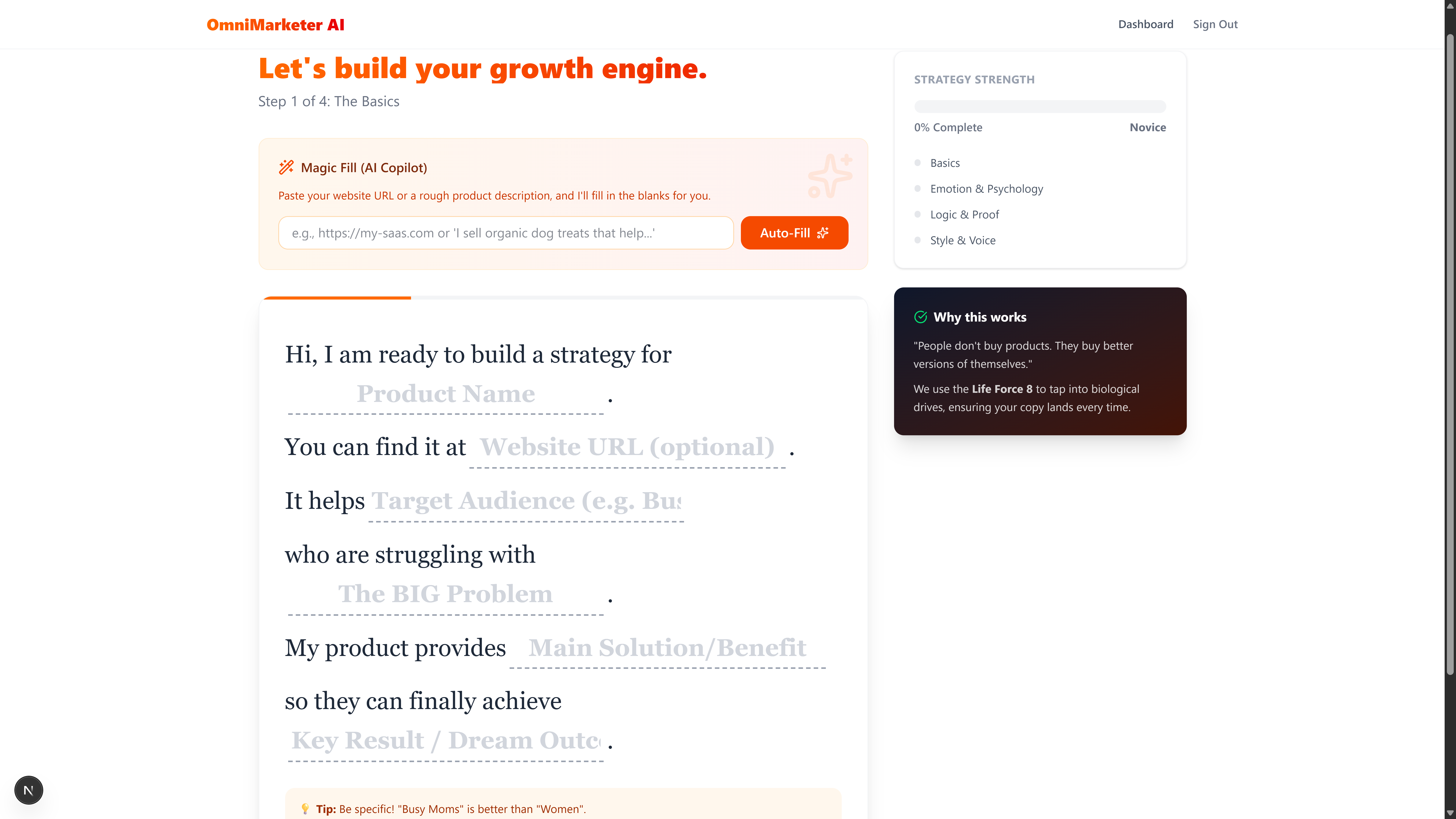
Onboarding flow concept
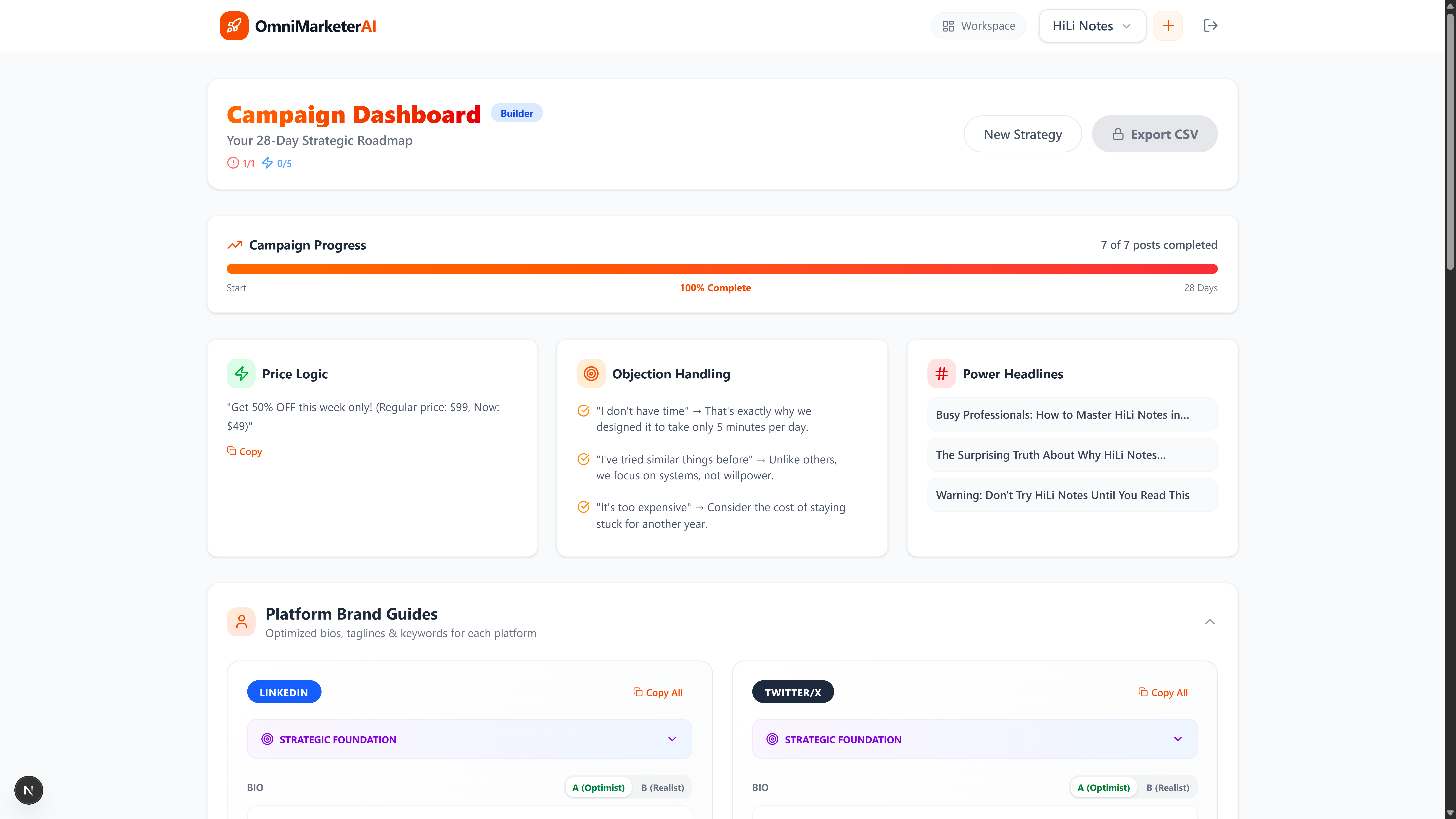
Dashboard with campaign overview
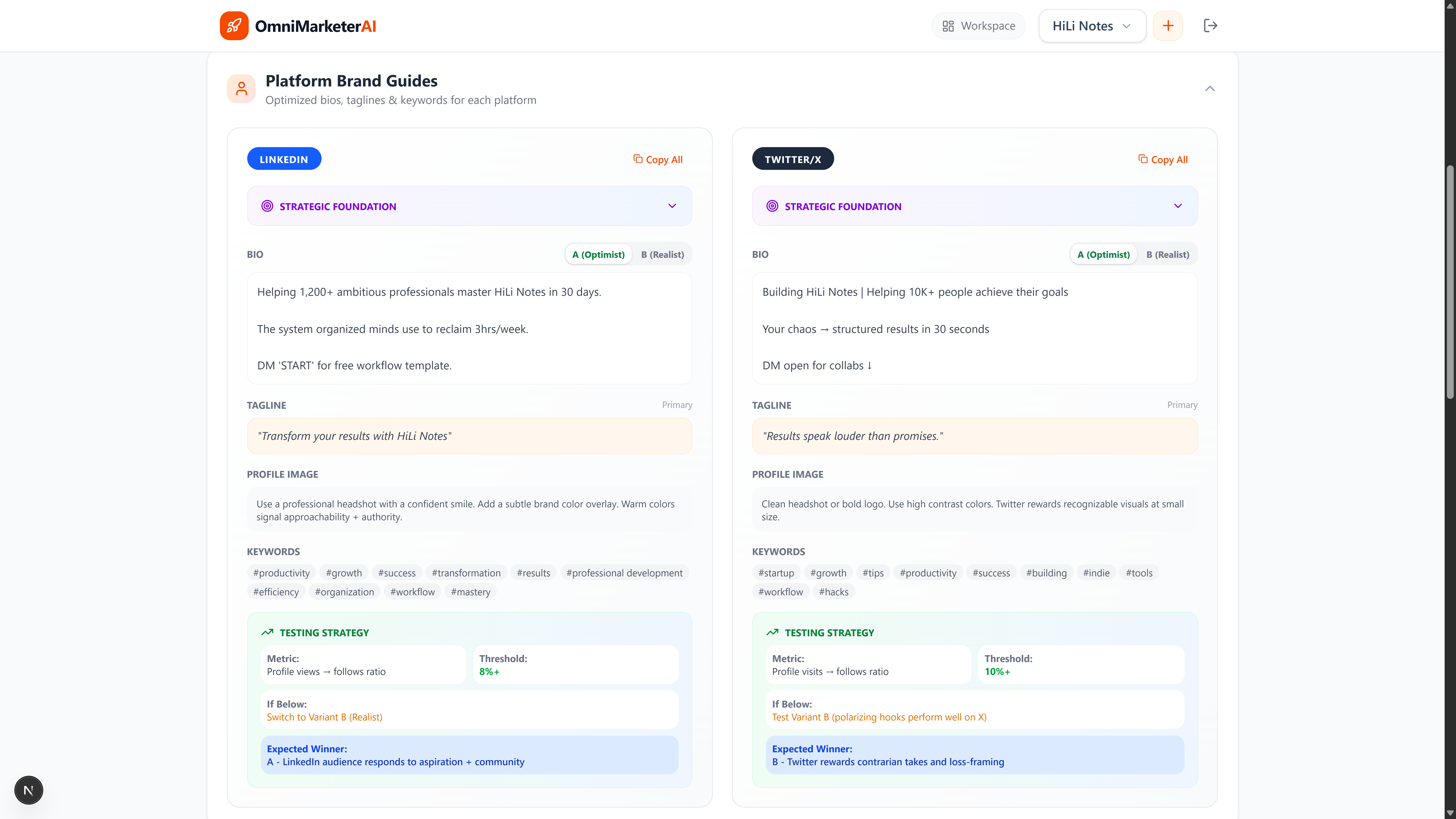
Brand guidelines screen
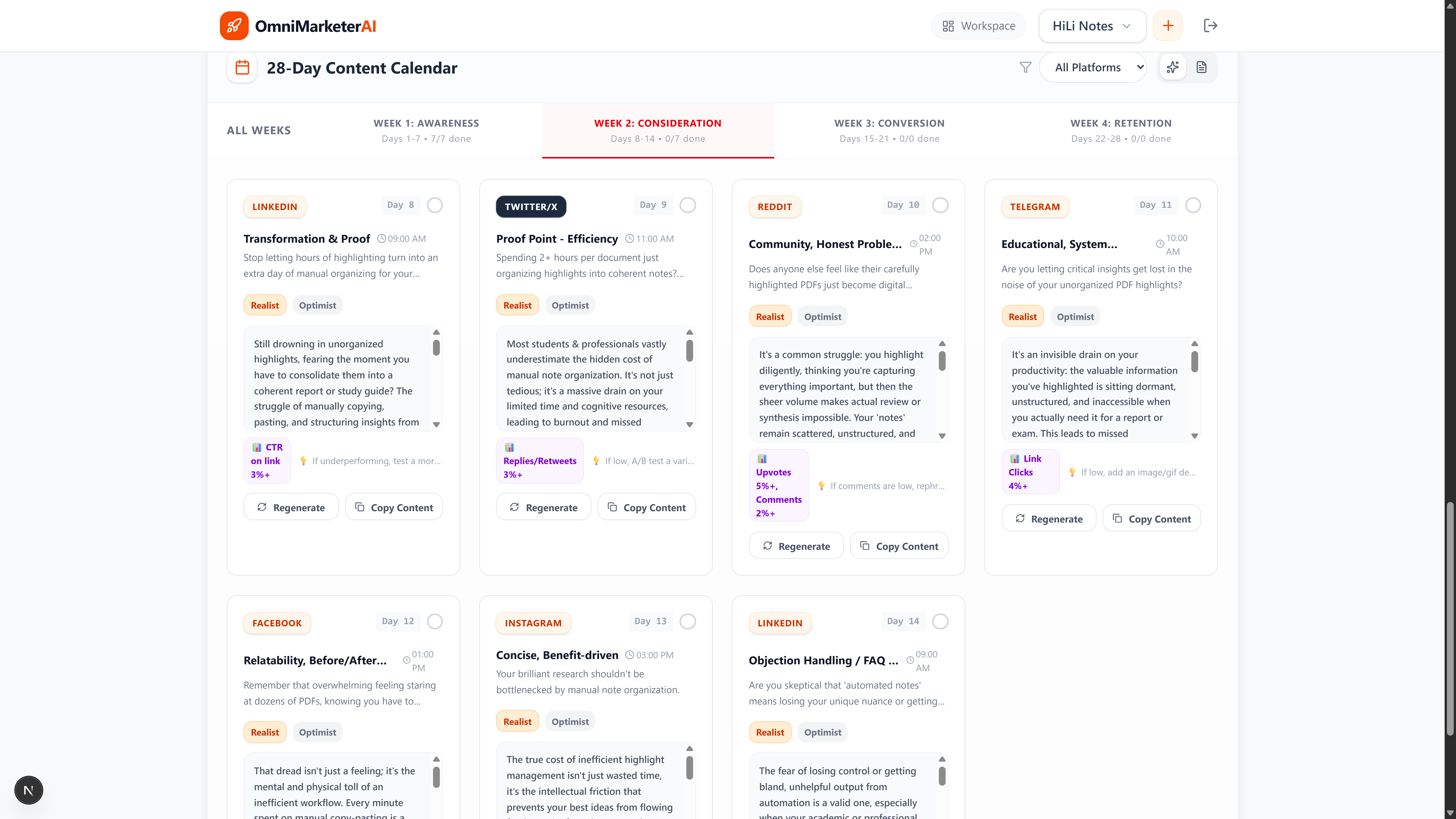
Content calendar concept
AI responses are inherently non-deterministic. How do you ensure marketing copy maintains a consistent brand voice across hundreds of generated outputs?
Design psychological framework templates with few-shot examples and add a validation layer to reject outputs that violate brand constraints.
Each social platform has different content requirements, character limits, and audience expectations. A single message can't work everywhere.
Design a platform adapter pattern with a universal content object. Each adapter would know platform constraints and transform content accordingly.
Most marketing tools only track vanity metrics. The real question is: which campaign actually drove revenue? Multi-step conversion paths make this hard.
A hybrid approach combining payment-provider webhooks for automatic revenue tracking, UTM parameter generation, and industry benchmark estimation for users without full analytics.
Through this exercise I saw how framing a product around outcomes (e.g. "double your email revenue") resonates far more than listing features (e.g. "7 email sequences"). Positioning is the real product.
Designing AI prompts with psychology frameworks (LF8, Cialdini, PAS) taught me that prompt engineering is essentially product design — you're shaping the output experience for the end user.
Sketching the full system — from content generation to revenue attribution — before writing any code revealed architectural trade-offs early and saved wasted effort on dead-end ideas.
Hypothetical tiers explored during concept design — not live plans.
1 active strategy, 5 AI suggestions/month, basic analytics. Designed for solo founders and first-time marketers.
5 strategies, unlimited AI, full 7-email sequences, team collaboration (3 members). For freelancers and small agencies.
Unlimited everything, white-label option, API access, dedicated support. For agencies and in-house teams at scale.
Planning assumptions for what a full build-out could look like.
Email sequences, social content, and brand guidelines powered by psychology-driven prompts.
Dashboard with conversion tracking, A/B test results, and revenue attribution per campaign.
Connect with popular CRMs to use customer data for email personalisation and segmentation.
Track all customer touchpoints and weight each one to show clear ROI per campaign.
Let's talk product strategy, AI prompting, or how I approach system design.