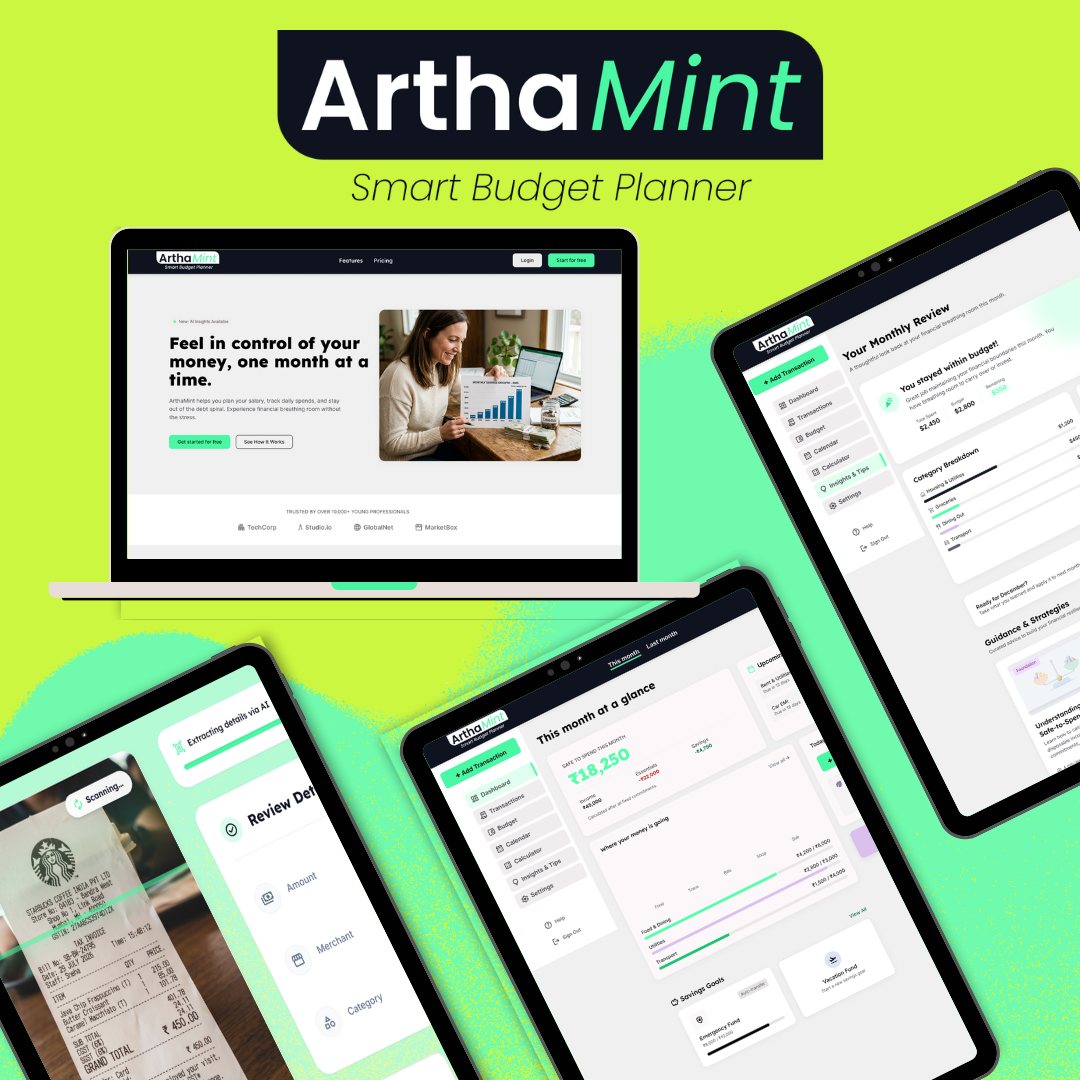
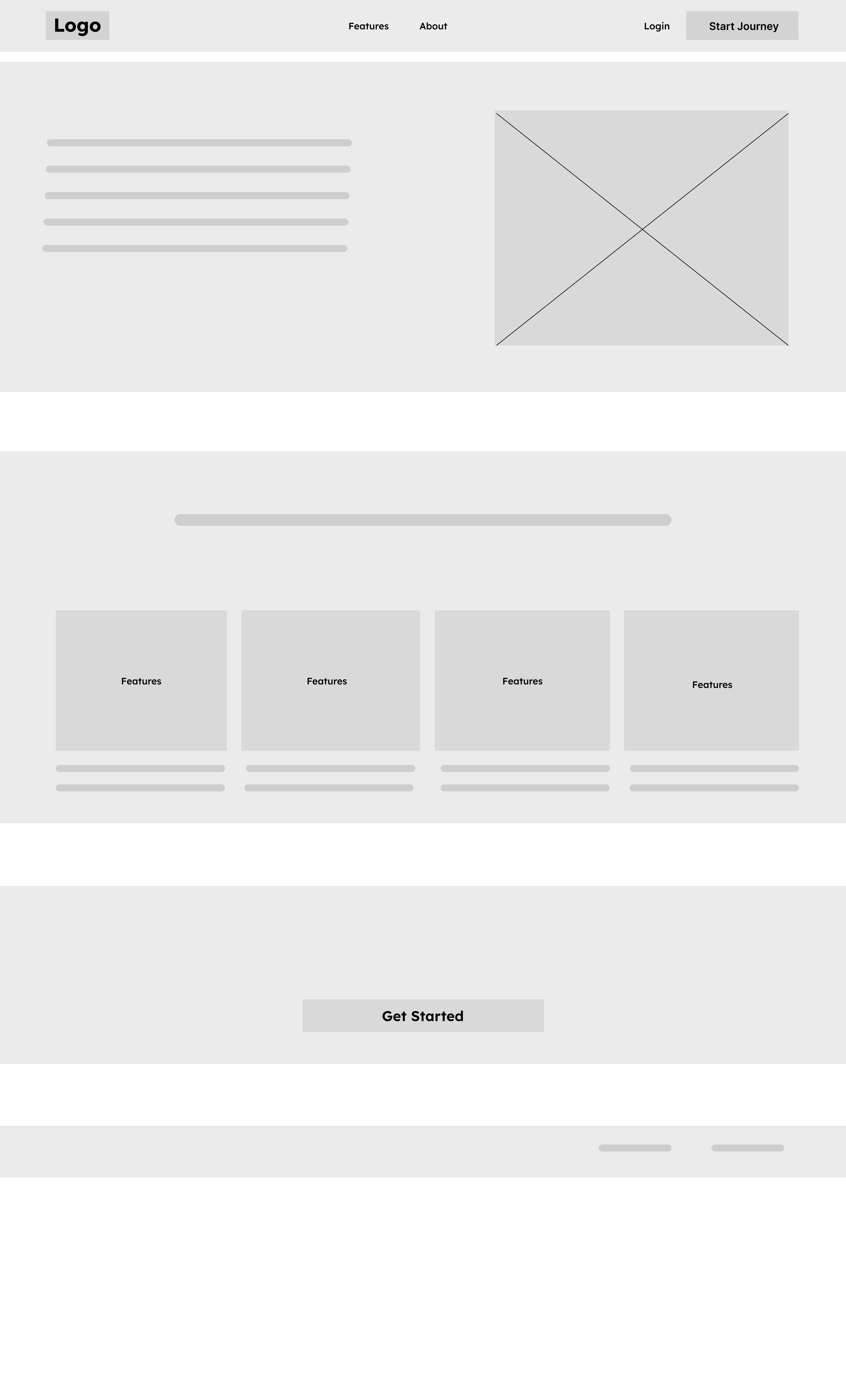
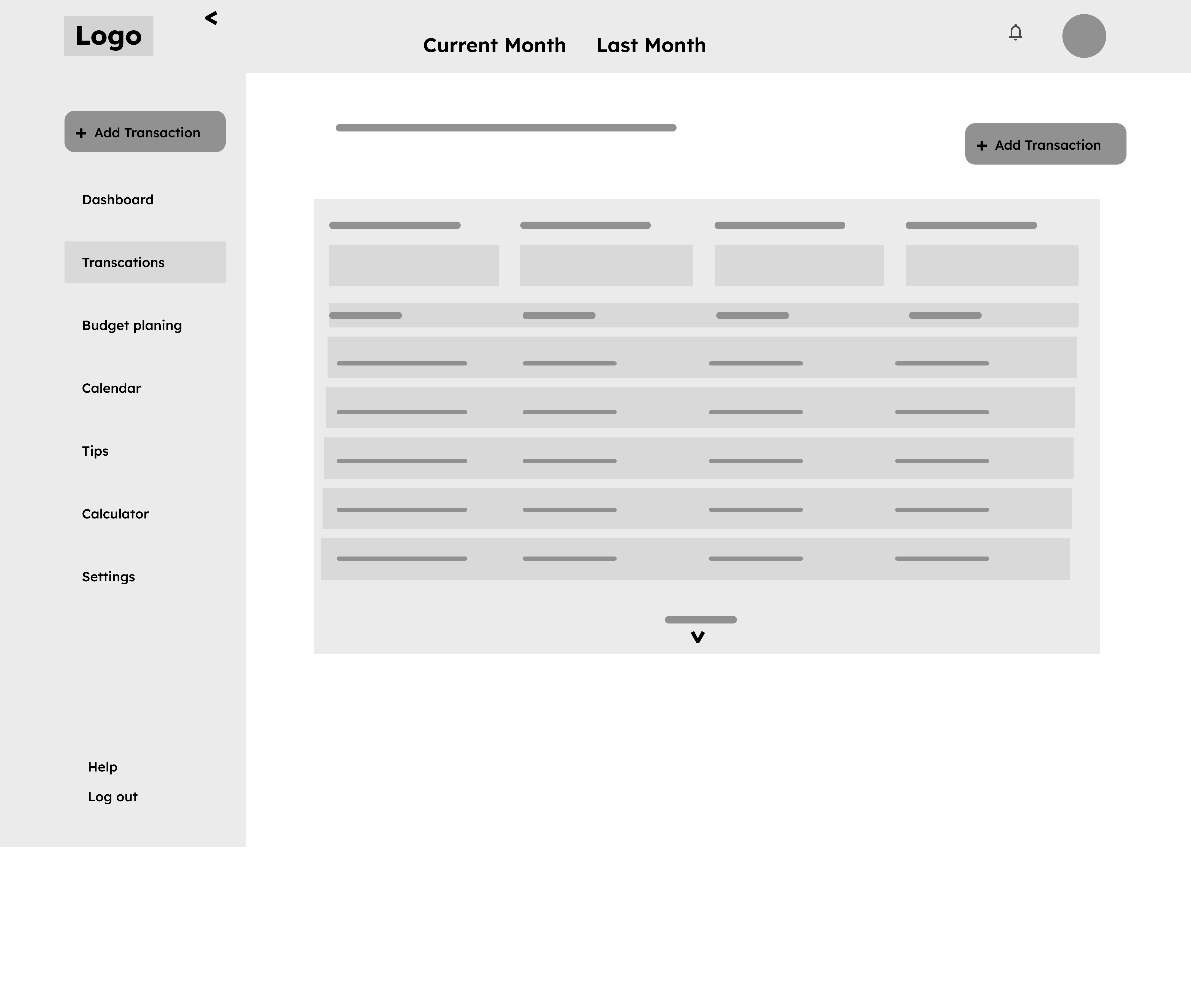
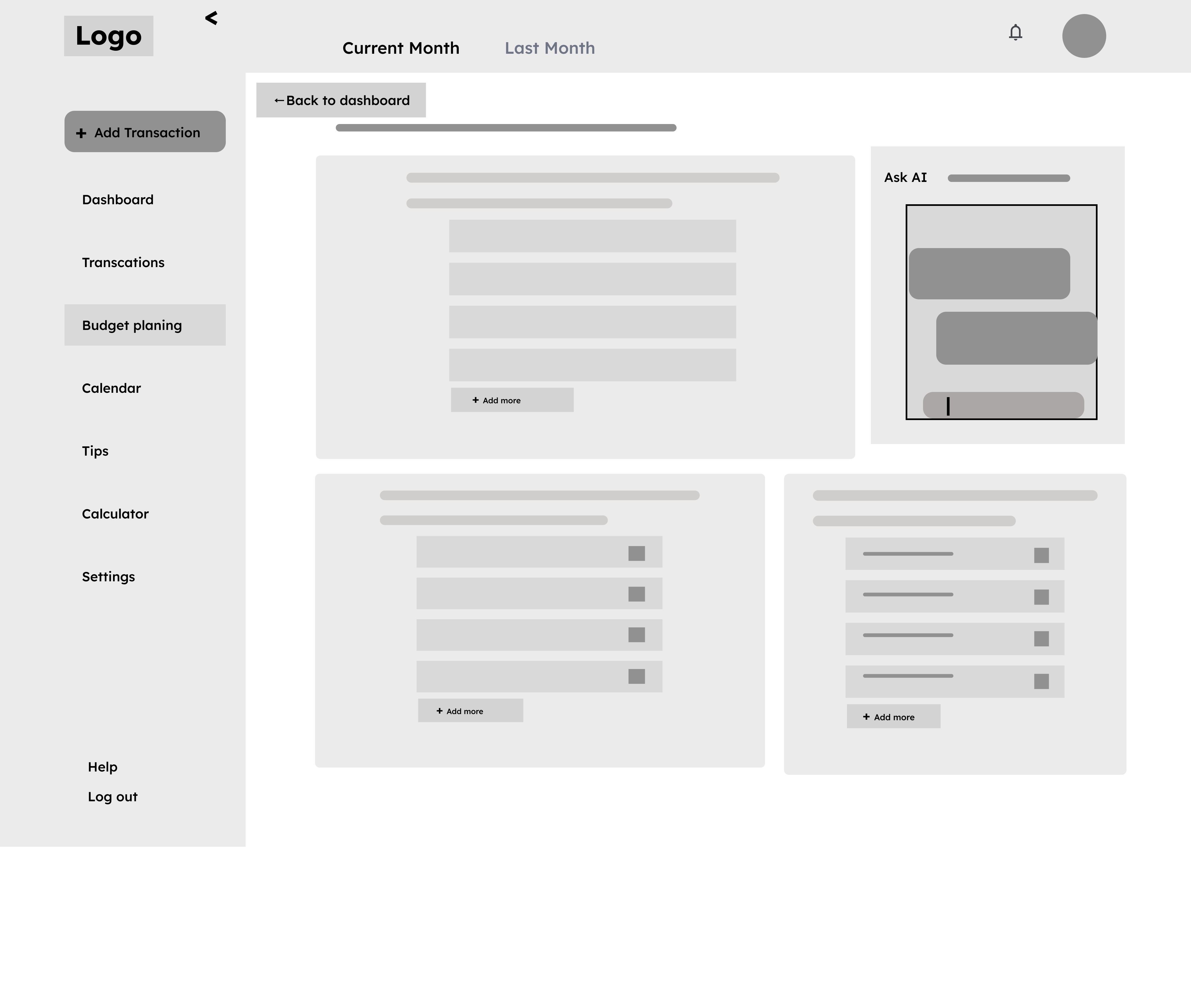
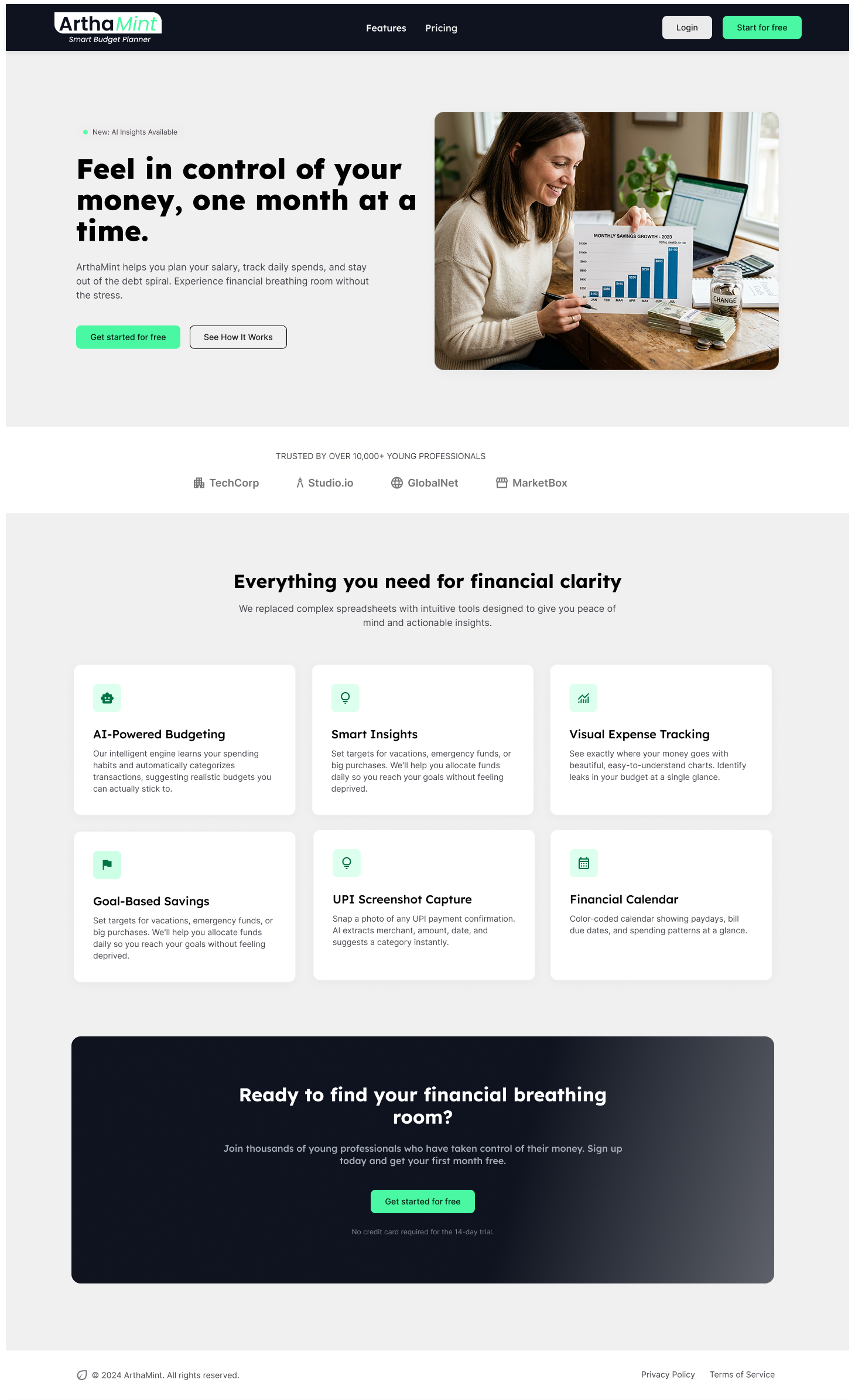
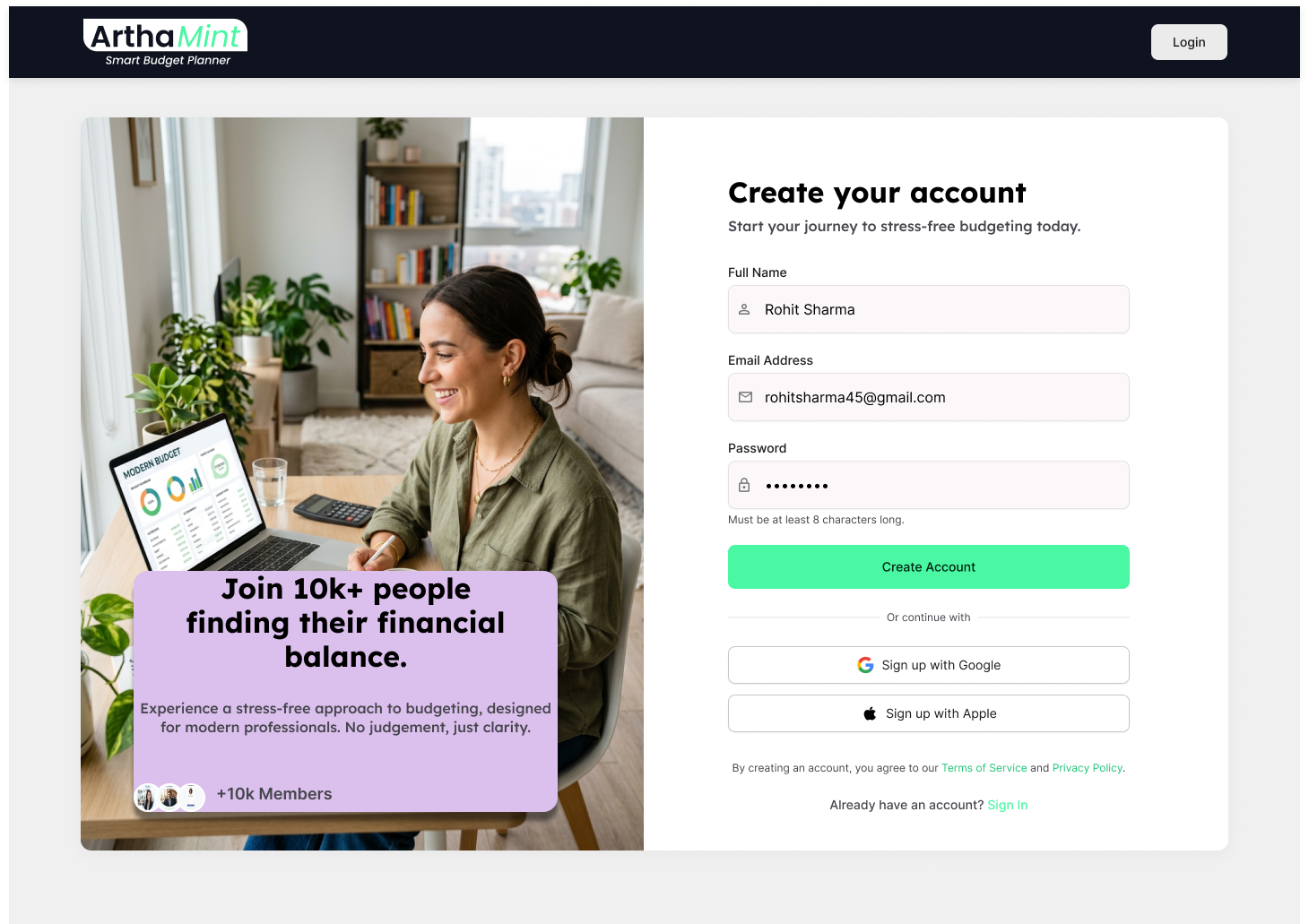
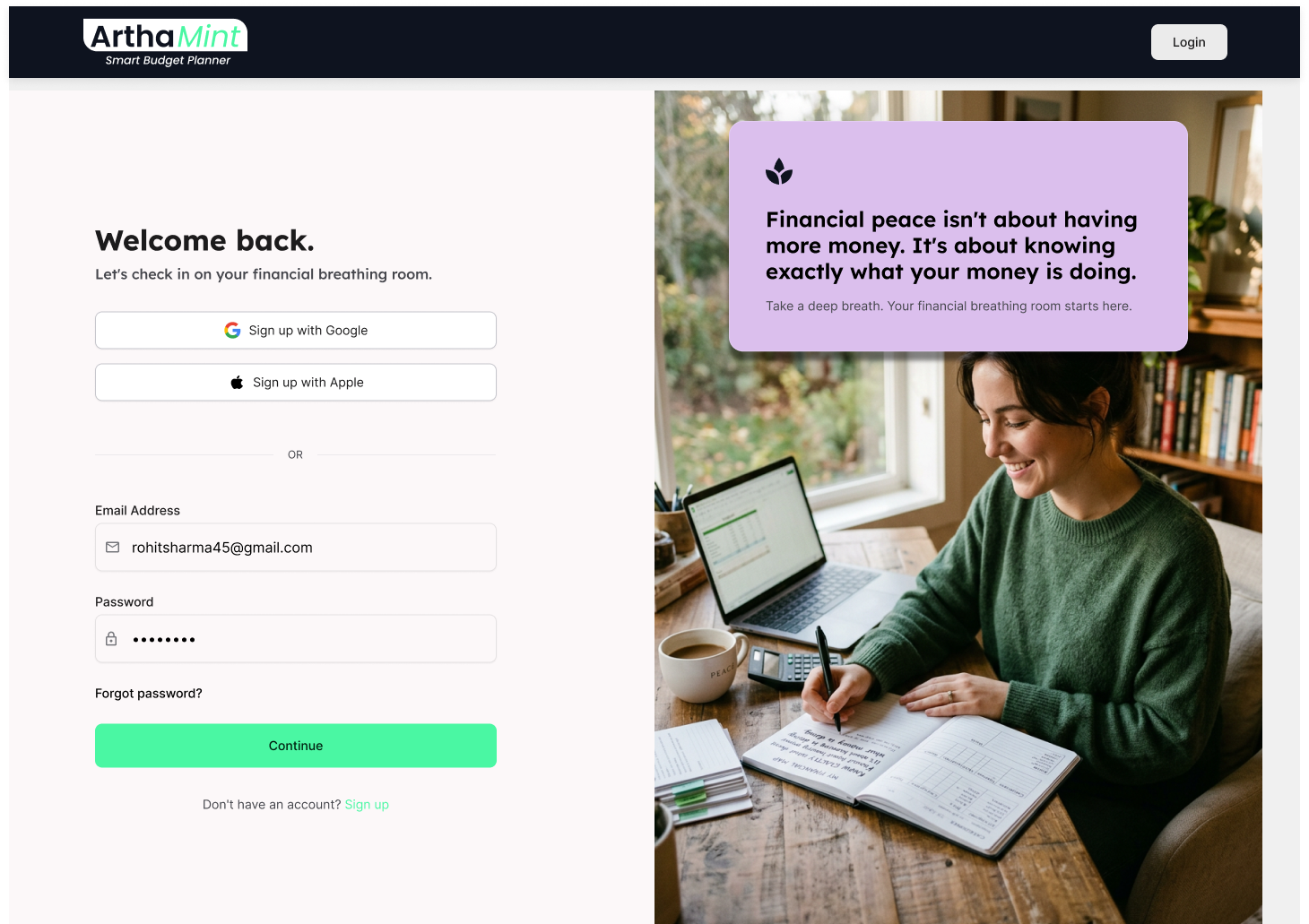
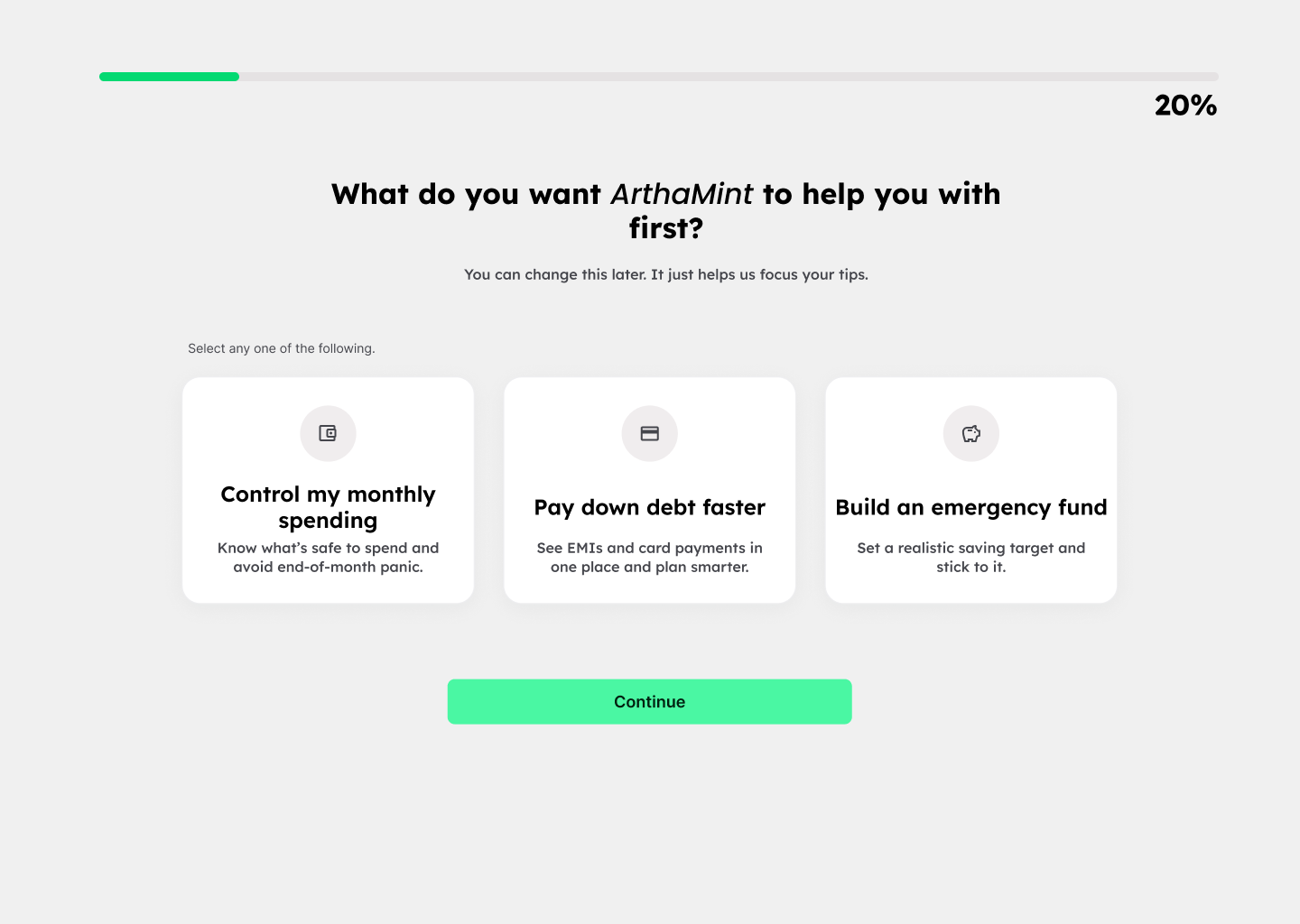
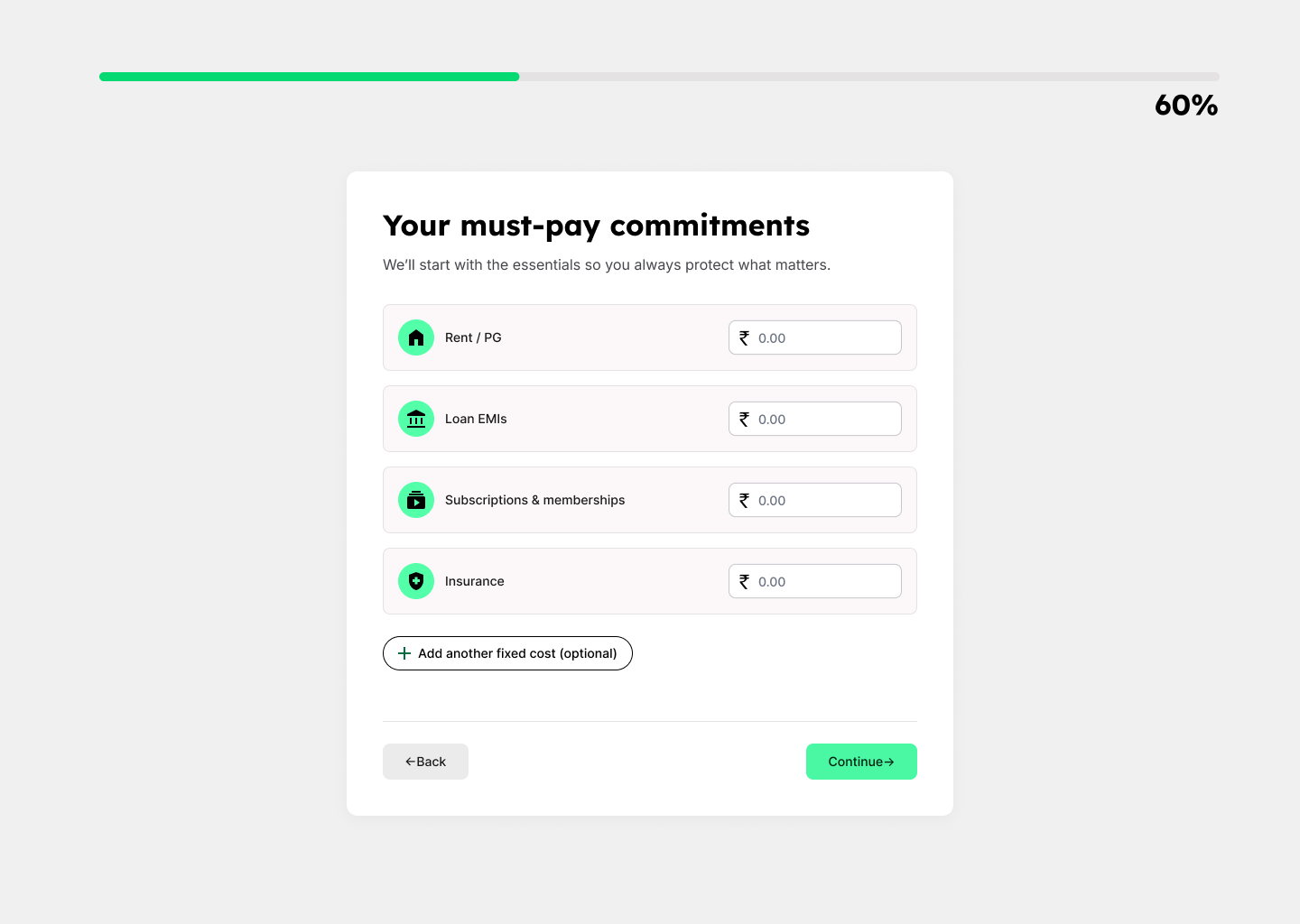
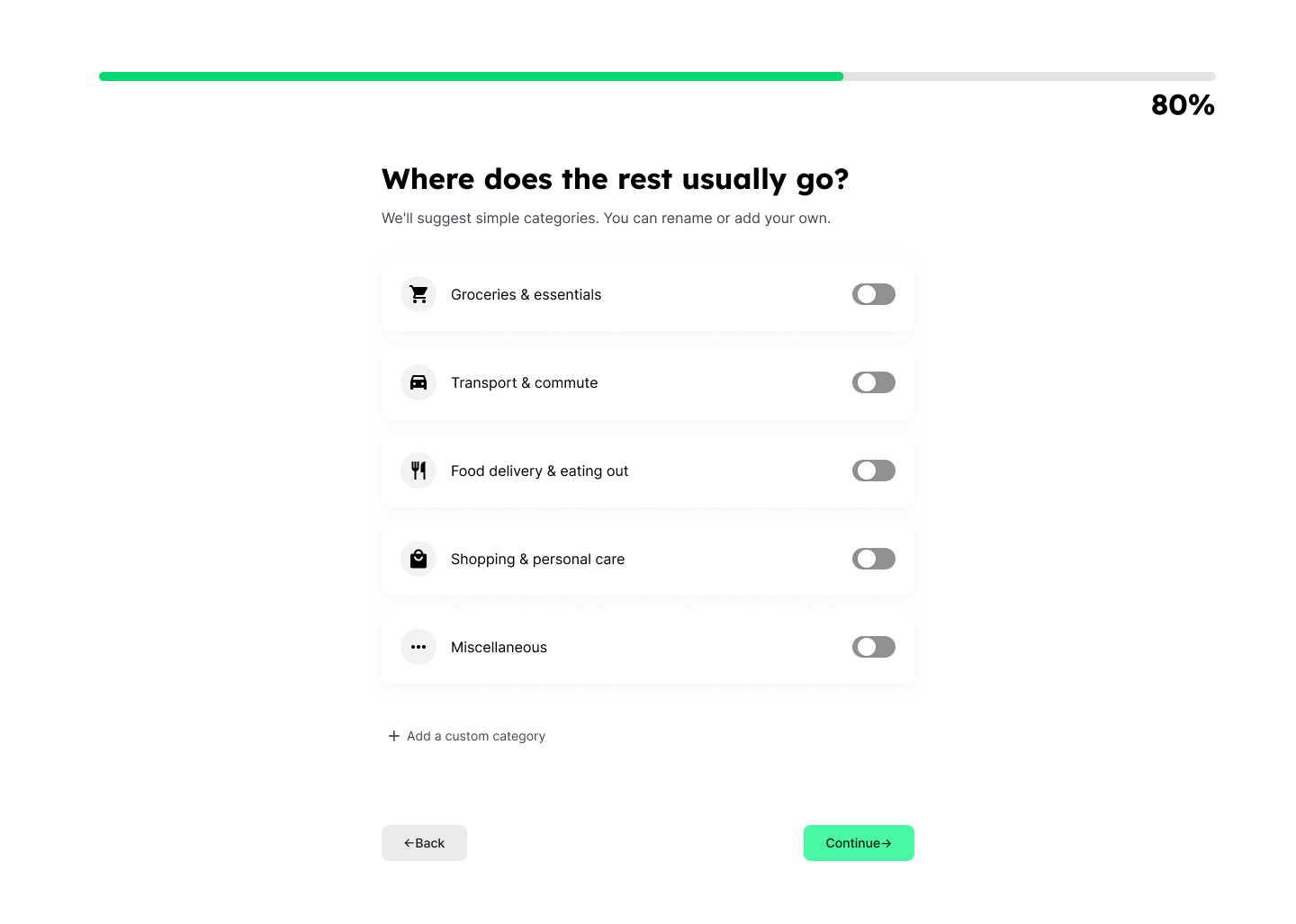
Track smarter. Budget better. Save effortlessly. A financial home base that makes money management feel natural and serene.
Many young professionals struggle with debt, irregular spending habits, and limited financial guidance. Existing finance apps are usually the problem, not the solution.
They're either glorified spreadsheets that feel like homework or so dumbed-down they're useless. People quit because they're tired of being lectured by a robot. They need more than just static charts โ they need actual guidance, empathy, and low-friction daily rituals.
"Target users require a serene, guidance-led interaction model that distills daily capital outflows into actionable insights and habit correction, prioritizing behavior over raw data visualization."
Rohit has been working for two years. His salary is growing, but so is his spending. Between food delivery, financing his new phone, and social outings, he's living for that end-of-month paycheck.
He doesn't lack the income; he lacks the habit. Every time he's tried a budgeting app, he's quit because the design felt clinical or judgmental. He doesn't need to be scolded for buying an extra coffee โ he just needs to know if he can afford it next week.
To build a buffer and stop stressing. He needs a quick, nightly ritual โ something he can check in 30 seconds that tells him, "Hey, you're good," or "Maybe skip the take-out tonight."
Users should get the value instantly, without a steep learning curve. No jargon, no complexity.
Encourage better habits without the nagging, "you failed" vibe. Supportive, not judgmental.
If a dashboard is too noisy, it's useless. Prioritize clean, organized information.
If a user can't record an expense in five seconds, they won't do it. Speed is non-negotiable.
The app must feel professional enough that you'd be comfortable connecting your bank details.
Interaction models informed by The Psychology of Money, Rich Dad Poor Dad, and Your Money or Your Life.
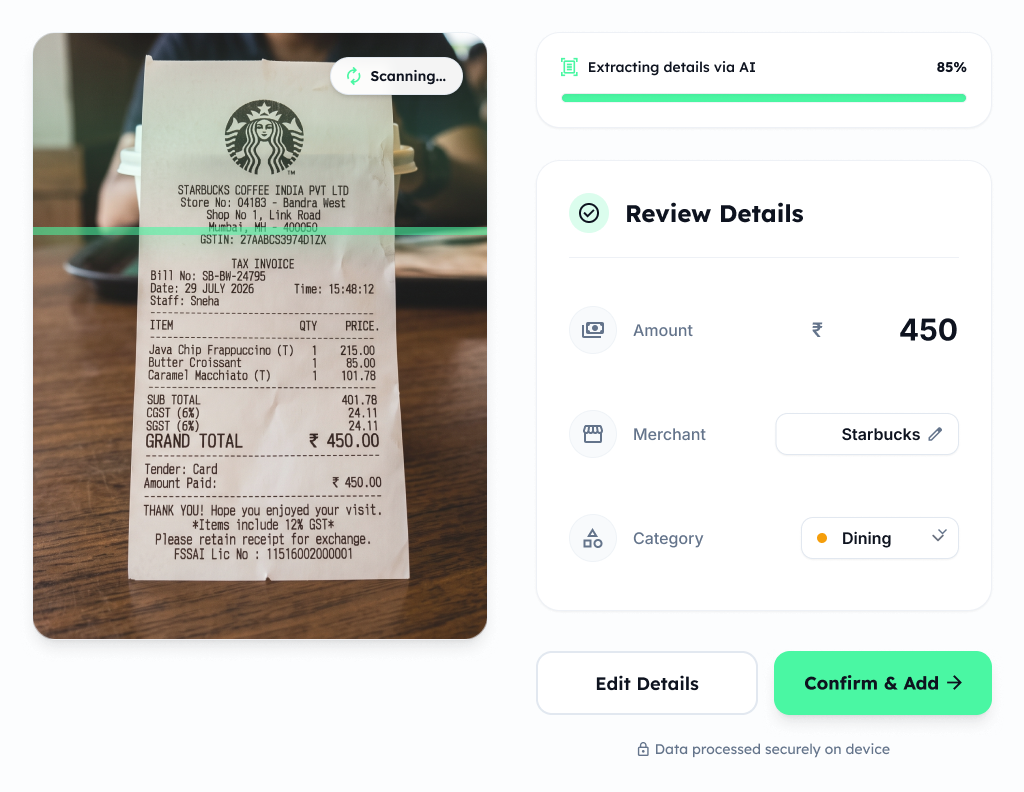
AI-driven parsing of UPI transaction screenshots to extract fiscal data and suggest behavioral categories automatically.
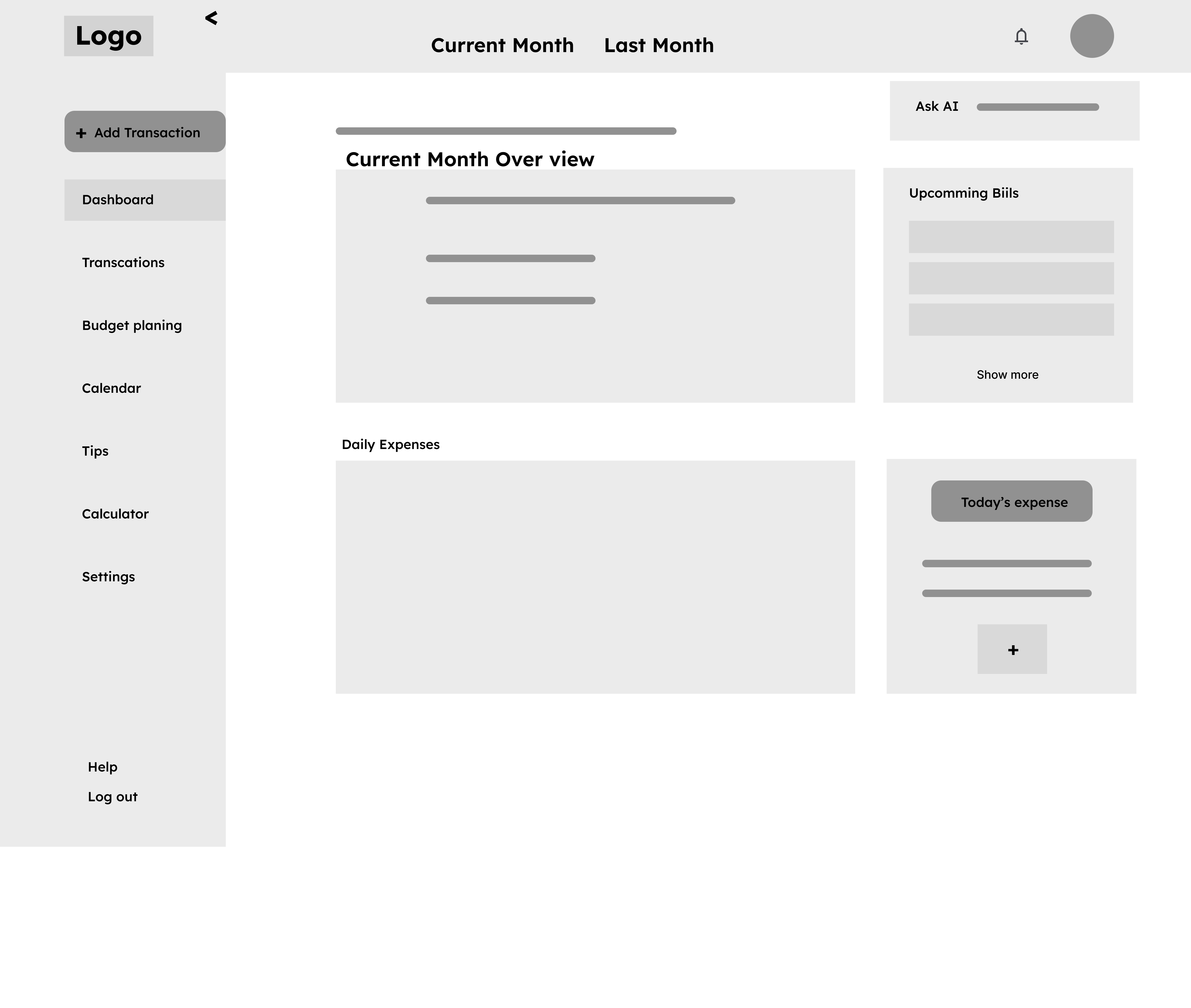
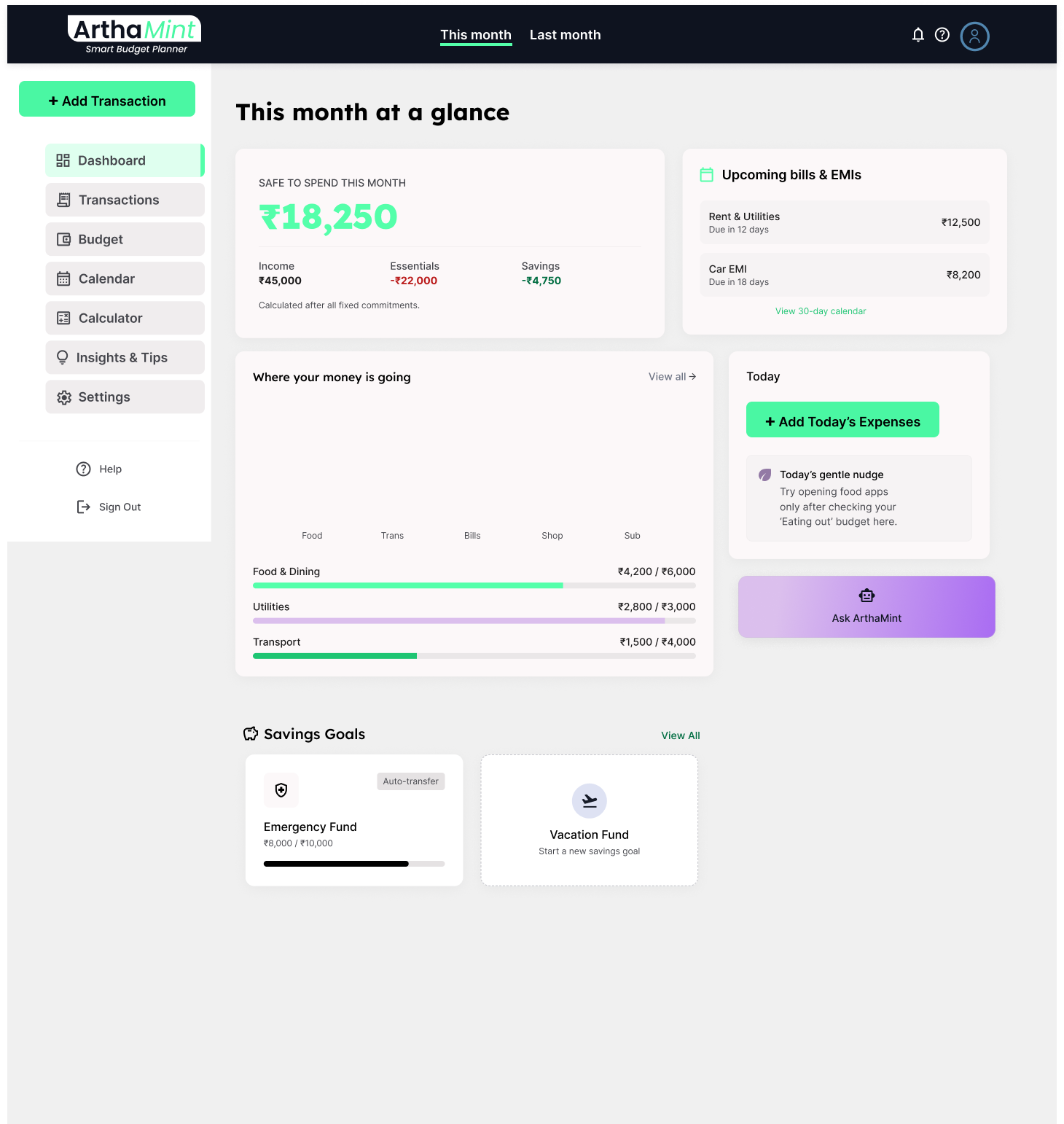
Immediate clarity on daily spendable limits โ one number that tells users exactly where they stand.
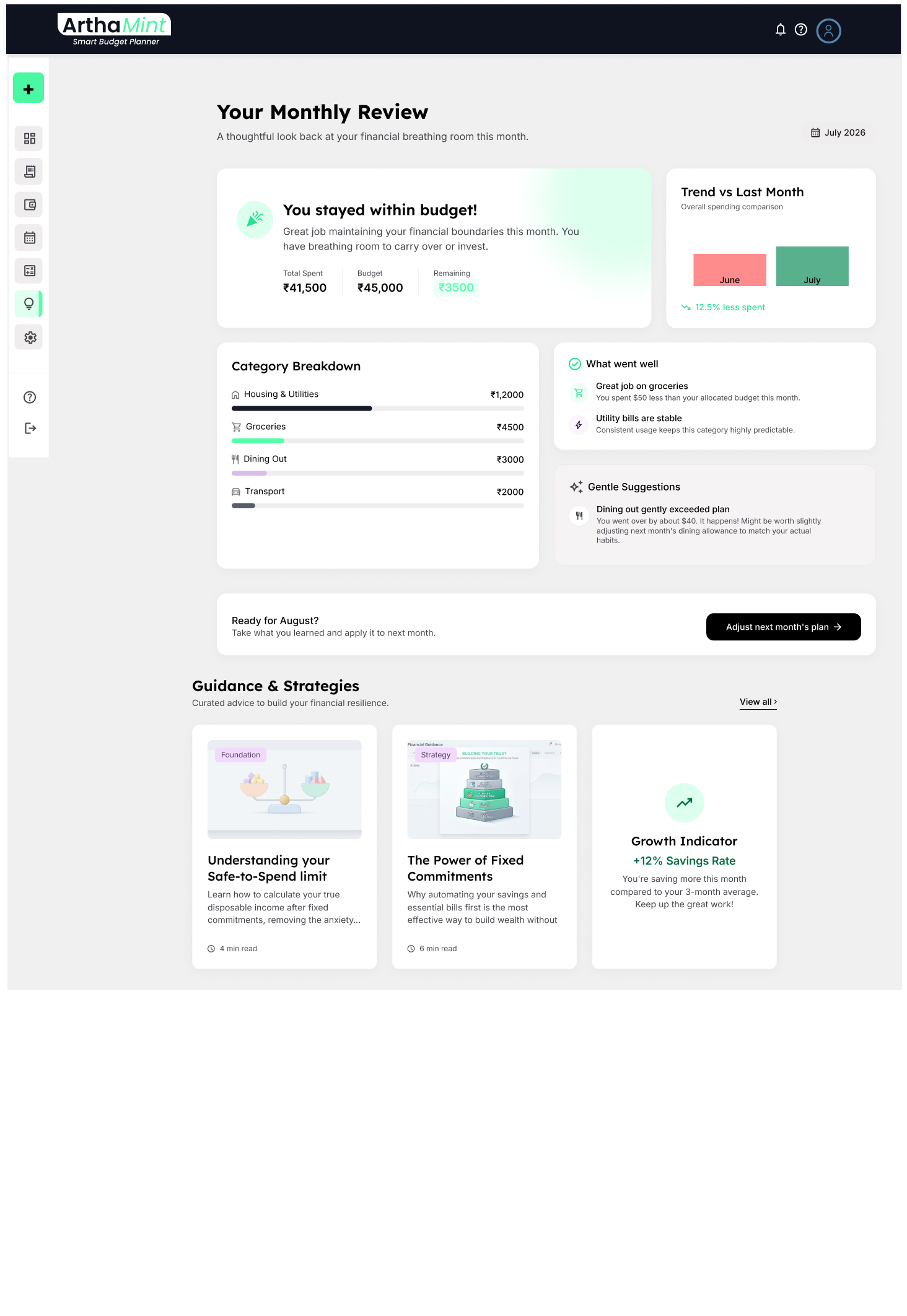
Behavior and personal finance tips grounded in books like The Psychology of Money and Rich Dad Poor Dad.
Supportive chatbot analyzing actual user spending data to provide personalized financial guidance.
Log/confirm expenses, tag 1โ2 as unnecessary, get one small insight and one suggested action.
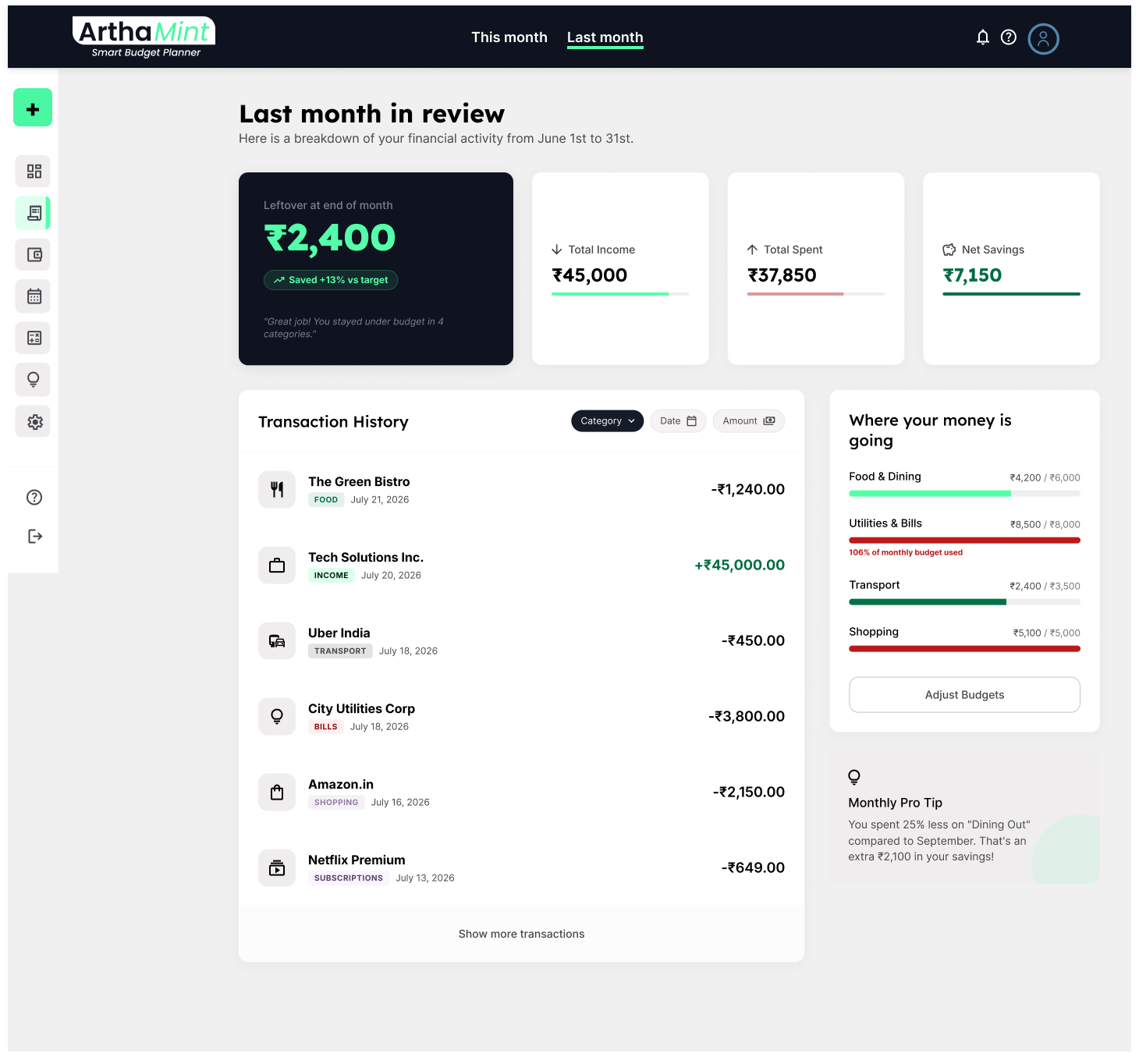
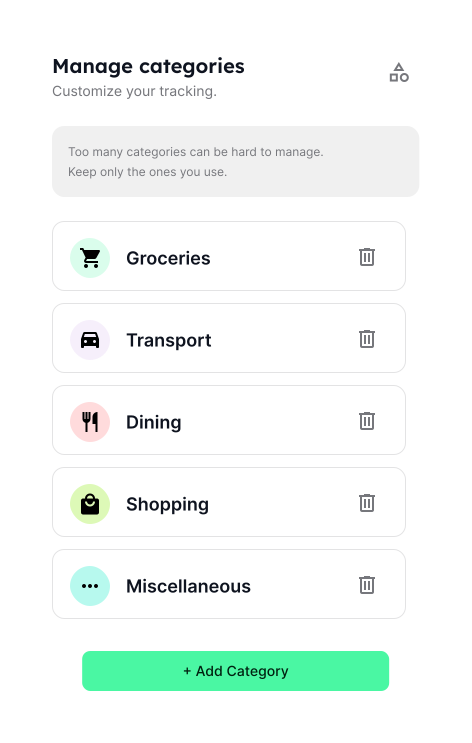
Automatic sorting of spending into needs and wants, with intuitive data visualization and smart filters.
Cross-platform competitive analysis and behavioral trend synthesis within the personal finance ecosystem.
Engineered the comprehensive UI experience, utilizing atomic design systems and interactive components.
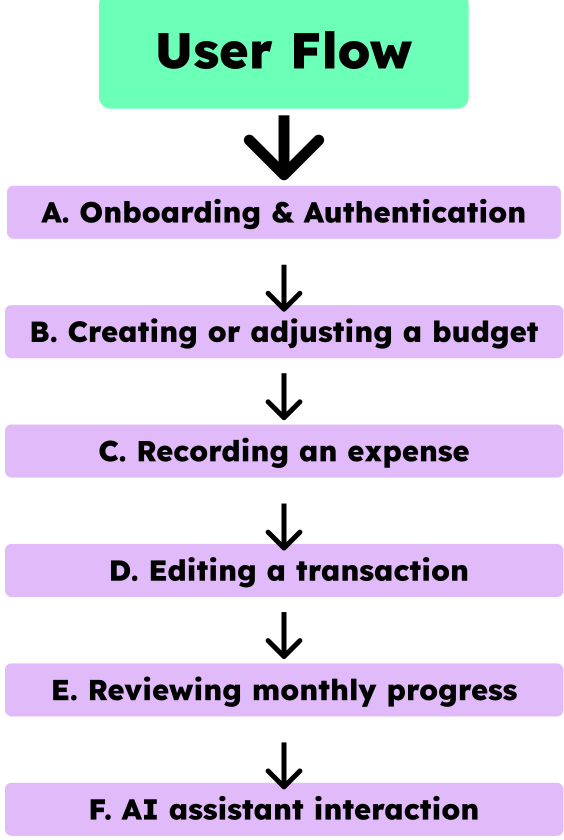
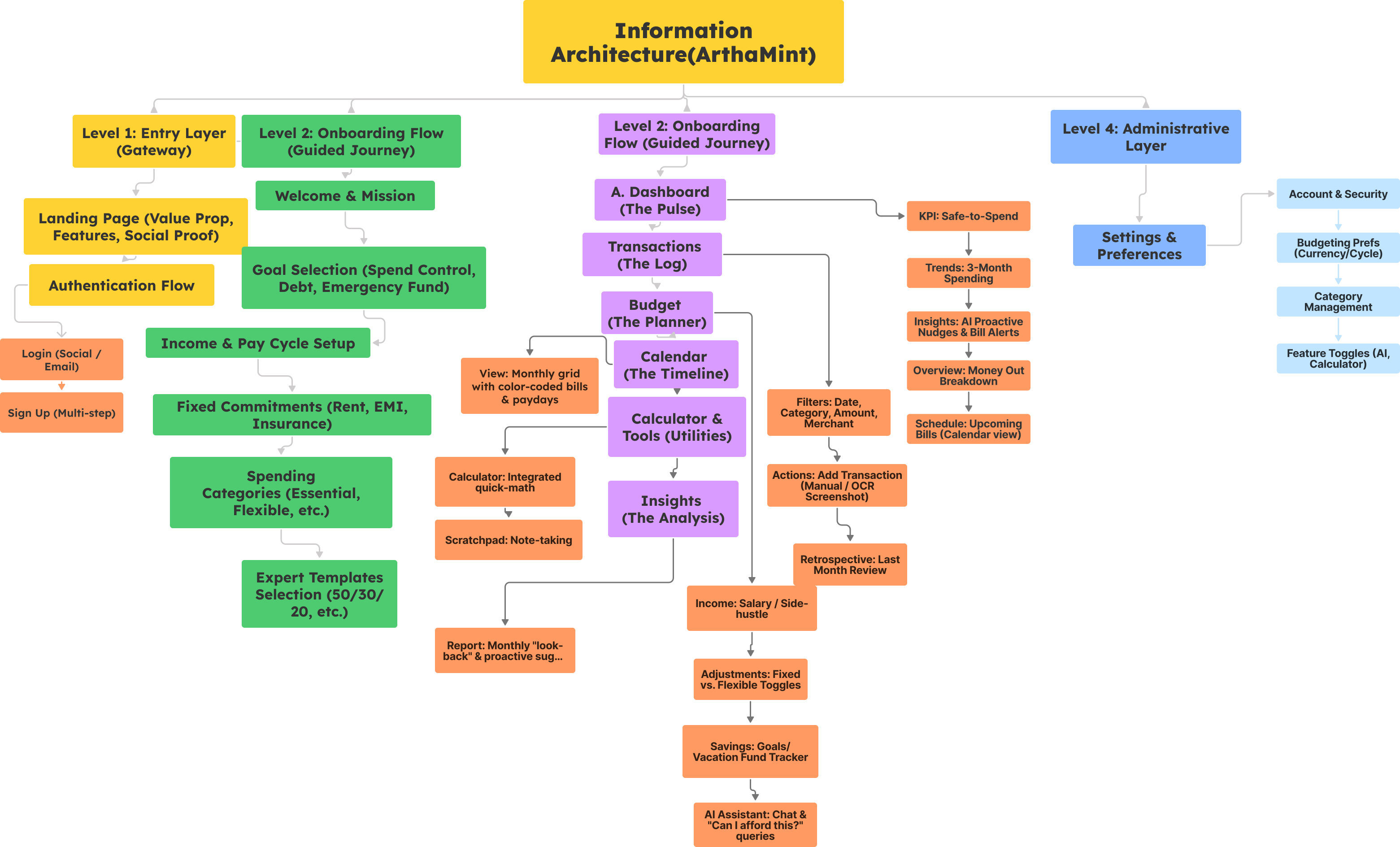
Mapped global navigation structures and defined end-to-end user sequences from onboarding to daily reflection.
Generated alternative layout configurations for dashboard card hierarchies and empty-state variations.
Brainstormed visual directions and established the serene, high-fidelity aesthetic for the product.
AI outputs treated as speculative drafts โ all flows validated against established regional transaction behaviors.
The biggest challenge was showing useful financial data without overwhelming new users. Many apps show complex charts and filters that can be stressful for people just starting out.
Prioritized "Safe-to-Spend" numbers and bill tracking to reduce stress. This helps users feel safer while keeping detailed tools just a click away if needed.
There is always a balance between AI doing everything and the user staying in control. Over-automation risks disconnecting users from their money management habits.
Designed a collaborative system: AI suggests categories and insights, but users confirm and tag their expenses manually during the nightly ritual โ keeping them connected to their finances.
The budgeting app market is crowded with established players. Differentiating ArthaMint required more than just features โ it needed a unique experience philosophy.
Focused on psychological safety and daily reflection over raw data control. Adopted a serene, supportive tone that diverges from the clinical approach of legacy tools.
"Diverging from legacy tools that prioritize raw data control, our architecture centers on psychological safety, daily reflection, and supportive growth for first-generation earners."
This project reinforced that great financial UX isn't about more data โ it's about the right data at the right time. By focusing on behavioral design principles and emotional safety, ArthaMint creates a space where users feel supported rather than judged.
Conduct usability testing with actual young professionals to validate design assumptions and refine the experience based on real behavior.
Improve tools for paying down debt โ simple EMI, credit card, and BNPL tracking with "next step" guidance instead of advanced dashboards.
Make the design work better across all screen sizes, taking ArthaMint from a concept to a fully functional financial hub.
Interact with the ArthaMint prototype directly below โ tap through the full user experience.
Want the full screen experience?
Open Prototype in Figma โPDF highlighting app that transforms highlights into structured, exportable notes.
Smart productivity app helping busy users plan tasks and build habits from one dashboard.
AI-powered marketing automation platform for email sequences and social content.
Enterprise feedback intelligence with AI-powered sentiment analysis.
See the complete UX design โ from research to interactive prototype.